
- Position:
- Batte Melt pump > NEWS >
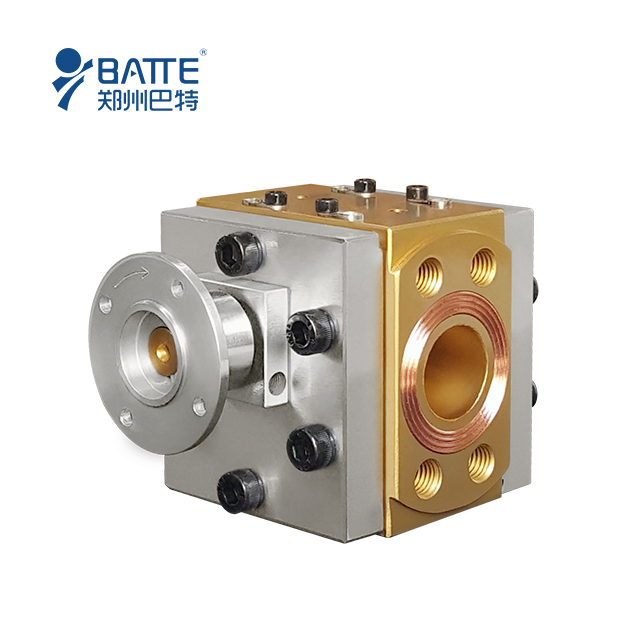
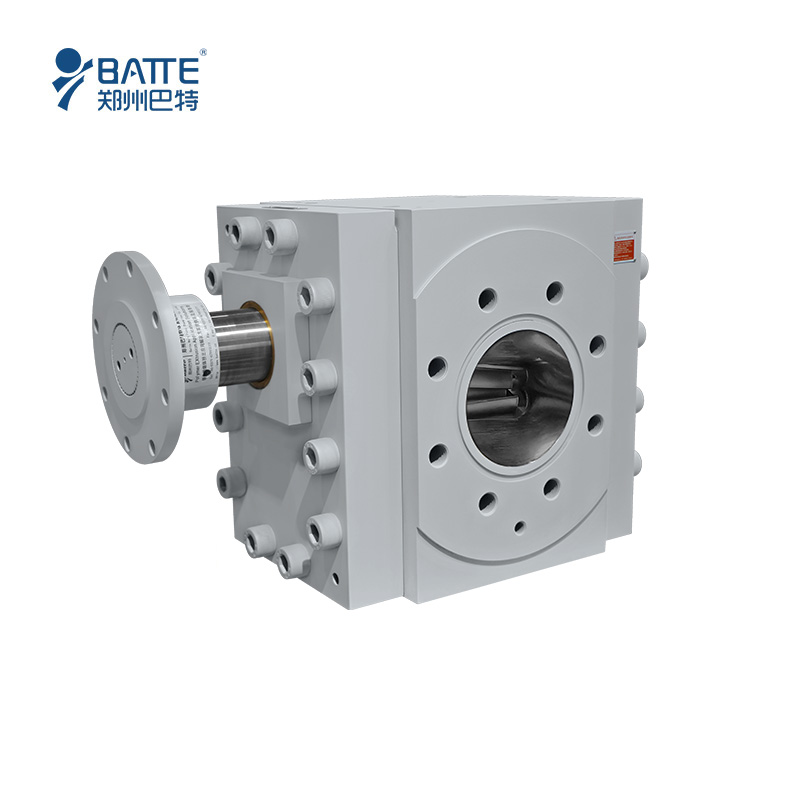

How to scientifically select a melt pump?
In the process of polymer extrusion production, many enterprises encounter problems such as melt pressure fluctuations, unstable product size, increased thickness deviation, and high energy consumption. Many people first think of the insufficient performance of the extruder, but in reality, the problem often lies in the mismatch between the melt pump and process parameters.
As an important device connecting the extruder and the die, the melt pump not only undertakes the important tasks of stable conveying, precise measurement, and continuous pressurization, but also directly affects the stability, product consistency, and operational efficiency of the entire production line. Scientific and reasonable selection of melt pumps can effectively reduce pressure fluctuations, decrease waste rates, improve product quality, and extend equipment service life, bringing higher comprehensive benefits to enterprises.
1、 Why is the selection of melt pump so important?
Many companies often choose melt pumps based solely on extruder output or reference to existing equipment models when purchasing them. Although this method is simple, it is not scientific.
Melt pumps belong to high-precision volumetric conveying equipment, and their selection should be comprehensively analyzed based on material characteristics, production flow rate, system pressure, working temperature, driving mode, and actual process, rather than simply corresponding to a certain specification model.
If the equipment selection is too small, it is easy to have insufficient flow and outlet pressure that does not meet the process requirements, which limits production capacity; If the model is too large, it will operate at low speed for a long time, reducing measurement accuracy and increasing procurement and operating costs.
In actual engineering, some companies blindly enlarge equipment specifications in order to reserve space for future production expansion, resulting in long-term low load operation. This not only fails to improve production efficiency, but also affects equipment stability. Therefore, only by accurately matching according to actual working conditions can the performance advantages of the melt pump be fully utilized.
2、 Focus on material characteristics
Material is the primary factor affecting the selection of melt pumps, and it is also the parameter that engineers first confirm.
Different polymers have different viscosity, flowability, shear sensitivity, and corrosion characteristics in the molten state, which puts forward different requirements for the structural configuration of the melt gear pump.
For example, high viscosity polymers require greater driving torque, higher mechanical strength, and more rational gear design; Low viscosity melts should focus on optimizing the sealing structure to prevent leakage and improve measurement accuracy.
For materials containing abrasive particles such as fiberglass reinforcement and mineral powder filling, wear-resistant materials and wear-resistant gear structures should be used; For corrosive media such as fluoroplastics and special engineering plastics, corrosion-resistant materials should be configured according to the characteristics of the media to ensure long-term stable operation of the equipment.
3、 Accurately calculate production flow
Production capacity is an important basis for determining the specifications of melt pumps and is also one of the core parameters of the entire selection process.
It is recommended to simultaneously calculate the minimum, regular, and maximum output of the production line, rather than just referring to a single operating condition. Reasonably select the theoretical displacement and working speed of the melt pump according to different working conditions, so that the equipment can operate in a high-efficiency range for a long time.
Properly reserving a certain amount of production capacity margin is beneficial for future product upgrades and process adjustments, but it is also not advisable to excessively enlarge specifications. Engineering practice has shown that "low-speed operation of large pumps" may not necessarily be more stable, but may actually affect the conveying accuracy and operating efficiency. Therefore, reasonable matching of displacement and speed is more important than simply pursuing "large specifications".
4、 Reasonably match pressure parameters
For polymer melt conveying systems, pressure parameters directly determine the pressurization capacity and operational reliability of the melt pump.
When selecting, it is important to confirm the following parameters:
Extruder outlet pressure;
Inlet pressure of melt pump;
Pressure required for the mold head and downstream equipment;
Pressure loss of screen changer, pipeline and filtration system;
The maximum working pressure of the system.
Only by conducting a complete pressure calculation of the entire conveying system can the pressurization capacity of the melt pump be reasonably determined, avoiding long-term overload operation and improving the safety and stability of the entire production line.
5、 Pay attention to the working temperature range
The melt pump operates in a high-temperature environment for a long time, and the temperature not only affects the viscosity of the melt, but also directly affects the service life of the equipment.
When selecting, not only should the maximum operating temperature be confirmed, but also the normal operating temperature and temperature fluctuation range should be mastered to ensure that the pump body, gears, bearings, and sealing structure can adapt to actual working conditions.
For high-temperature polymer production lines such as PET, PA, PPS, PEEK, etc., special attention should also be paid to equipment heating methods, insulation performance, and temperature control accuracy to avoid local temperature differences leading to melt degradation, uneven flow, or abnormal wear of components, thereby ensuring stable production.
6、 The drive system cannot be ignored either
Many companies focus on the melt pump body, but easily overlook the importance of the drive system.
In fact, motor power, reducer speed ratio, coupling form, and control method all directly affect the stability of equipment operation.
It is recommended to comprehensively calculate the driving torque based on the viscosity of the melt, system pressure, working speed, and safety factor to avoid long-term full load operation of the equipment. At the same time, for production lines that require precise control of output, a frequency conversion control system can be used to achieve continuous flow regulation and stable output, improving the automation level of the entire extrusion production line.
Engineer reminder: The three most easily overlooked issues in selecting melt pumps
Many companies are prone to the following three situations during the actual selection process:
① Only consider the output of the extruder and do not calculate the actual working conditions.
Neglecting material viscosity, system pressure, and production fluctuations resulted in equipment and process mismatch.
② Excessive pursuit of large specifications.
Believing that larger equipment is safer, but ignoring the impact of long-term low load operation on measurement accuracy and operational efficiency.
③ Neglecting the matching of the entire production line.
The melt pump is only one link in the extrusion system, and its performance is closely related to the screen changer, die head, pipeline, and control system. It should be comprehensively selected from the entire production line.
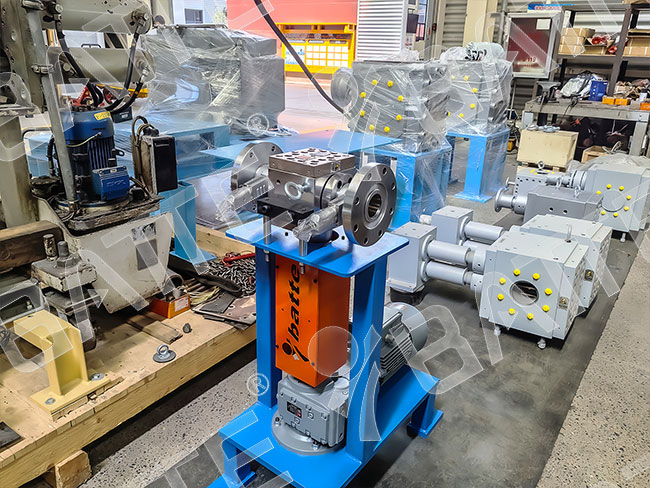
The selection of melt pumps is not simply a matter of corresponding equipment models, but a systematic engineering process that revolves around material characteristics, flow requirements, pressure conditions, operating temperature, drive configuration, and process characteristics.
For different production processes such as sheet, board, pipe, film, synthetic fiber, stretching granulation, blending modification, and polymerization reaction, no melt pump can be suitable for all working conditions. Only by fully combining actual production needs and scientifically matching the various parameters of melt pumps, melt gear pumps, or melt booster pumps can the advantages of equipment pressure stabilization, boosting, precise measurement, and continuous conveying be truly utilized, providing solid guarantees for enterprises to improve product quality, reduce comprehensive costs, and enhance market competitiveness.
Email: sale@meltpump.com
WhatsApp: +86 158 3833 1071

Any questions about our products, please feel free to contact us! We promise you high-end products and first-class service.Look forward to our cooperation!!!
- sales@battemachinery.com
- +0086-371-67991755


